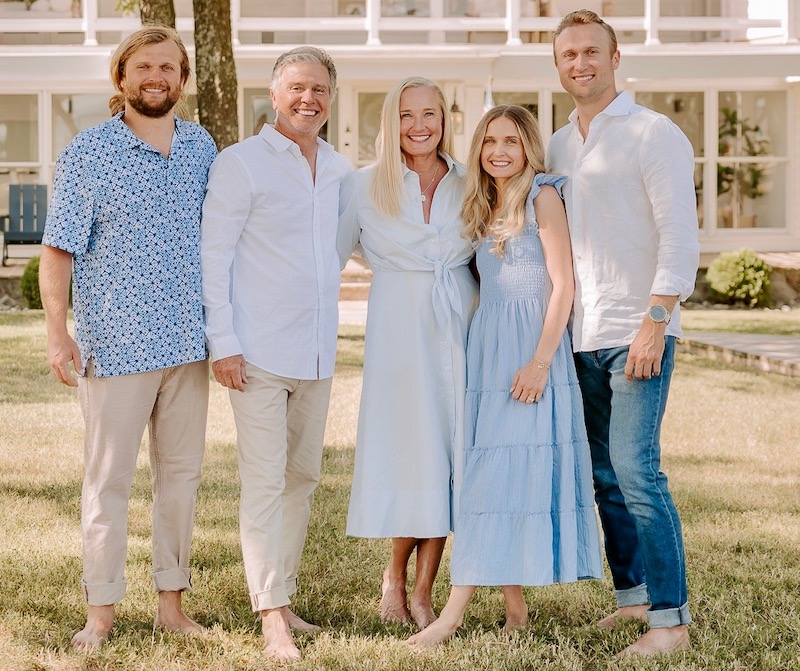
Drew, Kevin, Nadine, Samantha and Kevin Rudd, Jr. in Maryland last August.
Samantha’s wedding isn’t until October but Kevin Rudd, father of the bride, is already working on his toast.
He scribbles ideas in a journal as they flicker in his brain: sweet father-daughter moments, questions to puzzle through. Which songs did Sam and I sing on car rides to the College of Charleston? What was the funny thing that happened on our trip to Piney Point?
Ten years ago, Kevin would have delivered a pitch-perfect toast. A prominent investment banker and practiced public speaker, he would have nailed it. No stage was too big, no microphone too intimidating.
But today, at age 63, he’s worried. Will he get the words out without jumbling them up?
If it weren’t for the wedding, Kevin wouldn’t be thinking ahead like this. Fast-forwarding his life is disquieting. Heck, he can barely play it backward.
Officially diagnosed with early-onset Alzheimer’s in 2022 but showing signs of slippage years before, Kevin lives in the now.
He understands his disease. Watches it tiptoe into all corners of his life, sneaky and greedy-handed. Taking, always taking.
He’s fully aware of all he’s lost: his job, his freedom, most of his social life.
Unable to run meetings, he had to retire three months after his diagnosis.
His license was revoked after he failed a Bryn Mawr Rehab driving test. He couldn’t follow simple directions to navigate a car through Malvern. It wasn’t the first time Kevin had become lost at the wheel.
Invitations to golf and lunch with Waynesborough buddies have slowed to a trickle. Kevin has trouble finding his golf ball, sharing a fun story and following conversations.
It stings, all of it.
The man who once closed million-dollar deals can’t sell a stock or write a check. He can’t tell you what 9 plus 4 equals.
The fun seeker who initiated social get-togethers, booked the hotels and bought the tickets has ceded all planning to Nadine, his wife of 35 years. He has to read from Nadine’s script when he calls the barber.
“I’m the husband and the wife,” Nadine shares during our extended interview in the Rudds’ Tredyffrin home. “I’m losing my best friend, the love of my life, on a daily basis, through small losses all the time. This was the first year Kevin didn’t remember our anniversary; he didn’t remember my birthday. There’s a lot of tears; I’m not gonna lie. This is not what you expect your retirement to look like.”
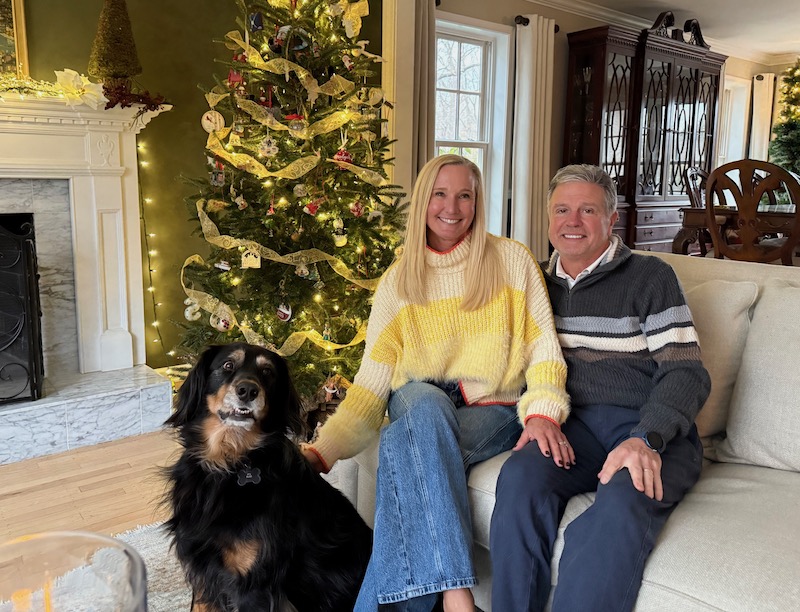
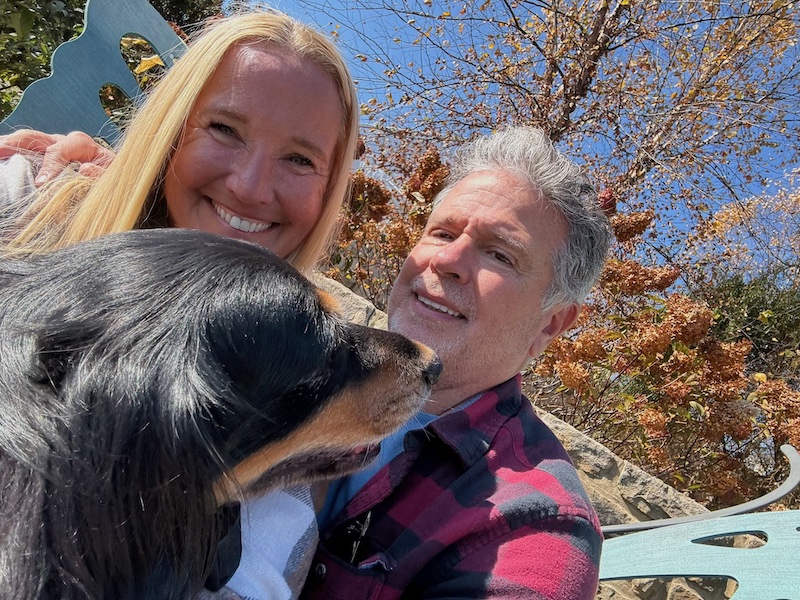
Nadine and Kevin with Otto in their Berwyn living room last month.
There are personality changes, too. The old Kevin was outgoing and loquacious. He’s muted now, straining to understand conversations, frustrated, at times, by his lapses.
At family dinners, Nadine knows to seat him in the middle of the table. He won’t be able to track the conversation if he sits at the head.
Early in his forced retirement, Kevin tried to fill time with guitar lessons at George’s Music. But when he couldn’t play chords learned the prior week, he quit.
For a longer stretch, he volunteered at Surrey Services in Devon: sorting donations, helping out in the fitness room, bussing tables in the café. But that gig ended last summer when Surrey’s volunteer coordinator called to say Kevin could no longer follow simple directions. Surrey, regrettably, couldn’t supervise him.
“That was a big blow,” Nadine recalls. “He felt like he had a purpose again. He can’t be working in investment banking, but he could be servicing the elderly. He felt a connection there.”
The Rudds know Alzheimer’s all too well.
Kevin’s mother had “textbook” Alzheimer’s, Nadine says. She was diagnosed at age 69 and passed 10 years later.
Nadine’s mother, who’s now 83, has lived with Alzheimer’s for about a decade. After she moved in with her son in Bucks County, Nadine started bringing her mom to Berwyn two weekends each month to give her brother a break.
Unlike Kevin, Nadine’s mom denies her diagnosis. “When she’s here with us, I feel like I live in a Looney Tune.”
Kevin’s case is different. “He’s in great physical shape; he eats really well. He knows what’s happening.”
As it often does, Alzheimer’s came on slowly for Kevin.
He’d be cooking and would ask Nadine to fetch “that round thing” – a spoon but he couldn’t name it.
He’d be picking up a prescription for Nadine but couldn’t give the pharmacist her birthdate.
He might forget that he’d eaten breakfast.
Or what he had for dinner last night.
Once he asked Nadine: Was I born in 1961 or in 1951?
“Something is off here; you have to see a doctor,” Nadine announced one day.
Their physician at Devon Family Practice did a short test and concluded Kevin was “just getting older.”
Nadine was unconvinced. A few months later, the Rudds went to Penn Medicine for a “litany of testing.”
His MMSE (Mini Mental State Evaluation) score was 24 out of a possible 30. Worse yet, brain scans showed telltale amyloid buildup.
On August 25, 2022, Penn neurologist David Irwin made it official. Kevin had Alzheimer’s – the “early onset” variety because he was under age 65.
“Sheer panic” ensued, Nadine says.
They’d heard that early-onset Alzheimer’s life expectancy was 3 to 7 years. Kevin had been showing signs for at least a year before his diagnosis. There was no time to waste. (The couple has since come to understand that Alzheimer’s “is different for everybody.”)
Money was their first worry.
Because Nadine works part-time as a paralegal and Kevin was the breadwinner, they quickly put their house on the market “out of pure fear.”
Beautifully appointed on a lovely street in Tredyffrin-Easttown School District, it attracted a buyer in no time. But that deal fell through and the Rudds wisely decided to stay put. Familiar surroundings are key for people with Alzheimer’s. Their home became their refuge.
Shortly after Kevin’s diagnosis, normally sunny Nadine sank into a dark depression. “I became a recluse,.. I was sobbing 24/7. Then a light bulb went off, like, this is not how you want to live your life. So I had to do the work to get out of it. And if you asked any of my friends, I think they would say: For the hand that she’s been dealt, she still can smile.”
After Nadine righted herself, the Rudds jumped on a promising new treatment.
Kevin had been approved for bi-weekly infusions of a new FDA-approved drug, Leqembi, that was helping some patients regain executive functioning skills. They’d have to pay $1,300 per treatment but “we made the decision as a family” to go for it. “I would sell everything I owned for a cure for Kevin,” Nadine says.
From March 2024 to January 2025, Kevin received infusions at the Hospital of the University of Pennsylvania.
They also tried acupuncture and yoga – anything “to calm Kevin’s inner voice.”
But his disease, stubborn, relentless, progressed.
Some $27,000 later, Leqembi was looking like a bust.
A second MMSE test confirmed it. Kevin’s cognitive score had fallen again, from 24 to 14.
“We were so hopeful,” recalls Nadine. “It was incredibly hard. We’d fought so hard.”
The Rudds changed course. They stopped the infusions and memory pills and would enjoy whatever time they had left together. They started traveling again – to Spain, Bermuda, the Chesapeake, New York City.
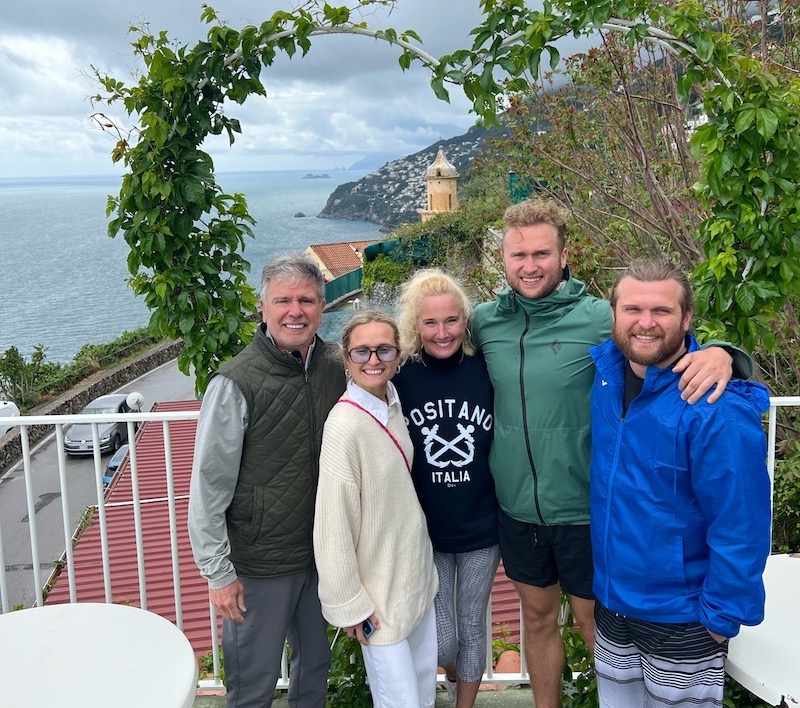
The Rudd family in Positano in 2023.
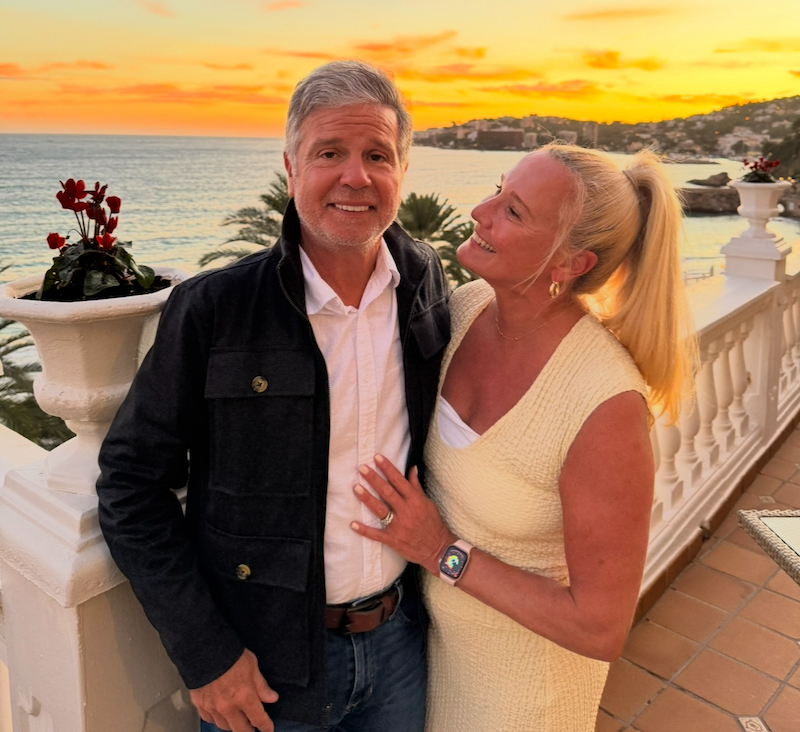
Kevin and Nadine in Mallorca, Spain in October, 2025.
Kevin keeps a tracking device in his wallet and wears an ID bracelet but after she lost him at the Philly airport, Nadine holds his hand in public places. When Kevin is in the restroom, she knows to station herself outside the door. Big trips through big airports, like most everything else, have become harder.
People who know them have openly wondered why the Rudds have chosen to go public with their story. So we asked them.
First, they want to shine a light on a disease we all fear and don’t fully understand.
“We want people to not stigmatize it,” Nadine explains. “When someone has breast cancer, people surround her, they know how to help, they ask her how she’s feeling. With Alzheimer’s, people are afraid to ask that question. Not knowing what’s going on in someone’s brain makes people uncomfortable.”
They also want to strengthen old connections and forge new ones.
Nadine hopes to hear from “people who are afraid my story might become their story … I want to be the person they call and say, ‘Something’s off with my husband or my mom right now. Can we talk about it?”
Nadine doesn’t know any local caregivers for a spouse with early-onset Alzheimer’s. Not one.
“My friends can think they understand what it’s like but they can’t. Just like I don’t know what it’s like to be a grandmother yet because I’m not a grandmother.” Last fall, she joined Surviving the Now, an online support group for people whose spouses have early-onset Alzheimer’s, hoping to find participants who live nearby.
Nadine wishes that someone local with the same disease will read Kevin’s story and invite him out for coffee “while both still know what’s happening. Maybe they can sit just there and go, ‘This sucks.’”
Only a few friends are regularly reaching out. One, notably, is Waynesborough golfing pal Joe Vogt, a heart transplant patient who knows all too well the burden and isolation of life-threatening disease.
Nadine also wants old friends to have a fuller picture of Kevin’s life. “They’ll say, ‘Oh, Kevin’s at a party and he’s talking. He seems great.’ But they saw him for an hour; they don’t live with him 24/7, seven days a week.”
If they’re better informed, old friends might not be as quick to call out Kevin on a story he gets wrong, a name he forgets, a ball he can’t track. “He has a brain disease. Why would you do that? That’s where I get angry.”
The Rudds are blessed with a “very good group of friends but people are busy with their lives; they’re working.” They mean well but often don’t know what to say. “When friends tell me I’m so strong, they’re wrong,” Nadine says. “There are days when I’m literally just hanging on … Instead of asking what I need, assume I need something because I do. If you make a pot of soup, just tell me you’re dropping some off.”
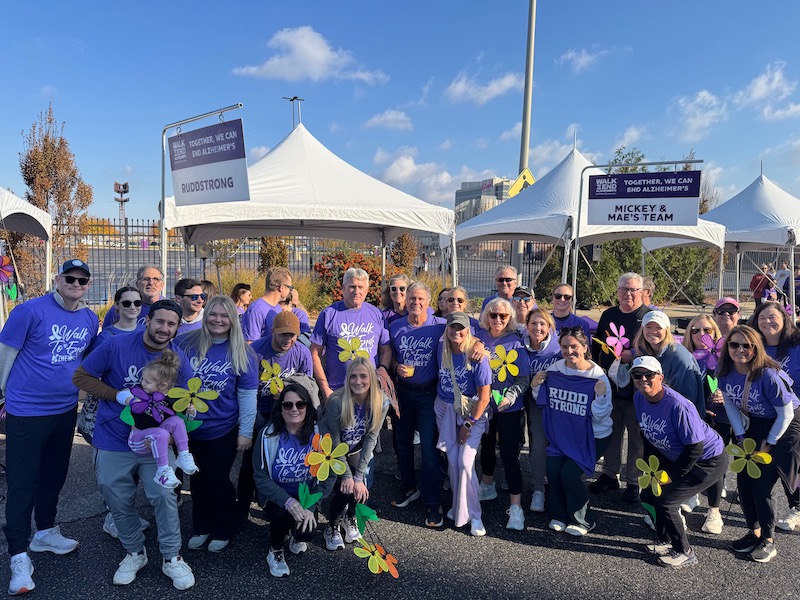
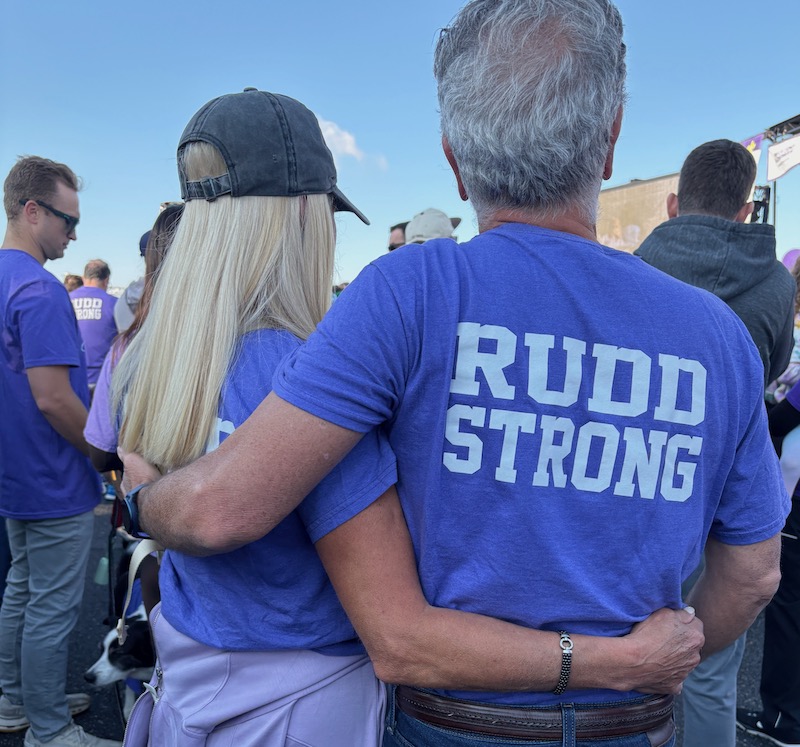
Not that their friend group hasn’t been extraordinarily supportive and generous, she says. Of the 618 teams entered in last fall’s Walk to End Alzheimer’s, the RuddStrong team of 54 walkers (below) raised the Walk’s third highest total: $44,250. (The two higher-ranking teams were corporate.) “For our family, that Walk is like Christmas morning. I don’t feel alone that day.”
But as Kevin slips further, their world is shrinking.
Their three adult children have stepped up but they don’t live in Berwyn. Most days, it’s just the two of them and their dog, Otto, sharing a quiet, cloistered life at home.
Conversation is hard for Kevin so they do things that don’t require much of it.
They work out and stretch together in their small basement gym.
Devout Catholics, they read the Bible and pray together each day, guided by the Hallow app.
Longtime foodies, they cook together. Nadine takes the lead; Kevin is sous chef. “He’s a great chopper,” his wife says. Sometimes they meet their adult kids in Center City for dinner.
Kevin can still take Otto out for walks. He can still find his way home from runs and bike rides on the Chester Valley Trail. With a few trusted friends, he occasionally plays a round at Waynesborough.
Ask Kevin his biggest fear and he looks at his wife, blinks back tears, finds three ways to say the same thing. “If you died. Losing you. If you weren’t with me.”
With her family history of Alzheimer’s, Nadine could undergo genetic testing to ascertain her risk. She’s taking a pass.
“Why do I want to live my life knowing I’m going to get a disease that there’s no cure for? Or do I just want to live my life knowing I’ve got today – that’s all I have – and I’m going to live it fully?”
Shouldering a boulder of loss and persistent, low-grade fear, Nadine insists she’s happy. “I trust in God and I try not to be afraid.”
She feels closer to Kevin, closer to her kids and grateful that Alzheimer’s has given her “this reset in life … You realize: Take the trip. Do the expensive dinner. Because at the end of the day, if you have all this money saved up and you didn’t spend any time together, what is that? How fun is that?”
Nadine has become a compulsive photo taker and videographer. “It drives people crazy but those images are etched in my phone forever. They’re etched in my memory forever.”
For now though, she’s focused on her daughter’s wedding, her son’s engagement and finding peace in the everyday.
“I don’t know what our story looks like in the end, but I know how Alzheimer’s looks and what happens. So in between – from the diagnosis to the end game, whether Kevin remembers today or he doesn’t – I’m going to make as many memories as I can.”

Thanks, Caroline. Lots of love from me to one of my favorite families.
My heart goes out to your family. I wish Kevin and your family strength and love. My mother and father both had Alzheimer’s Disease. I had the privilege to take care of my mother – and through it all, she was surrounded by love, and we truly had fun together. My goal was to make every day was a good day. Perhaps she didn’t remember it the next day, but we were fully immersed in happiness together each day. When she couldn’t play bridge anymore, we simply made up games that were fun to do together. Some were so silly we found ourselves laughing. I know you have the same loving outlook. And, I know this is such a challenge. I can tell your wonderful family is up to the challenge – together.
An exceptionally poignant story. God bless the Rudd family!
Beautifully written Caroline, you captured the Rudd’s story perfectly
Beautiful family; beautiful story. Thank you!
Beautifully written Caroline! You captured the Rudd’s story perfectly
Great story. Nadine brave and helpful to let it out. Thanks for sharing. My wife of 63 years has dementia. Doc will be testing her for Alz in a few months. She displays many of the symptoms that Kevin does. Also, she is not so mobile as she once was. It is heart wrenching. In our mid-80s, not so easy to travel, but we go for rides, out to eat, and still socialize with caring friends. We will add the Rudds to our evening prayer list. I ask the Rudds, in turn, to pray for us. Luis and Maria Morales, Paoli.
What does “moderation” mean?
I think you’re referring to reader comments being submitted for “moderation.” it’s a bit of a misnomer. it means comments are checked for profanity and cheap shots before they’re posted. They aren’t changed.
“Review” might be a better description of your “moderation.”
Agreed.
Thanks for covering this story. An important one.
A heartbreaking story. I wish this brave and loving family love and grace and the continued ability to treasure each day that they have each other.
Nadine
When you read stories like this you realize you have no problems. God bless both Kevin and Nadine.
Nadine,
My heart and prayers go out to you, Kevin, and your family. I know your pain all too well as my brother who was only 58 at the time was diagnosed with FTD, which is an aggressive form of Alzheimer’s. My father also had Alzheimer’s. This disease is unlike any other any tears every part of your heart in pieces. My prayer for you is to have patience since at times, it’s going to be difficult. Just always remember it’s not Kevin but the disease and never, ever give up on the power of prayer! I too, am a devout Catholic and place all my fears and trust in our Lord. Just don’t take time for granted and make memories, and cherish what you have now. God bless you!
FTD is NOT an aggressive form of Alzheimer’s. FTD is its own type of dementia with different pathology
Thank you to Nadine and Kevin for sharing such a real, raw, and human look at life with early-onset Alzheimer’s. Their experience, the small losses, the deep love, the hard choices, and the quiet joys, resonates in a way that goes beyond statistics and reminds all of us why compassion and connection matter so much. As someone who walks alongside families navigating dementia, I see how powerful it is when stories like this are shared with such honesty and heart. Reading how they choose presence over fear and make room for joy even as things get harder feels like an invitation for all of us to think differently about dementia, caregiving, and support. I hope others facing similar challenges see themselves in this and feel less alone, and that this kind of storytelling opens the door to more gentle, compassionate conversations within families and communities.
“Shortly after Kevin’s diagnosis, normally sunny Nadine sunk (sic) into a dark depression.” The correct past form of sink is sank; sunk is the past participle. “The ship sank” or “the ship has sunk” or “the ship had sunk before all the survivors could be rescued.” The verb is sink, sank, sunk. Sadly, more distinguished publications than “Savvy” make that and similar mistakes. Sad story; the Rudds are a nice local family.
I did know that. Not sure why I typed sunk. Will fix immediately. Thanks for the heads up.
Get a life, James! So sad!
That’s all you can focus on after reading this story? Especially when Caroline prefaced the article by explaining that she had rushed to publish it? James, please take a step back and take a good, long look in the mirror. Flexing your grammatical muscle is not helpful here. Perhaps you should try volunteering at Surry Services if you have the time and wherewithal? Or volunteer to teach English as a Second Language (ESL) since you are a wordsmith? Those would be much more beneficial to everyone in your community than comments like this.
Sixty-two words, James, to correct a grammatical error in a poignant and brave story about a family suffering a devastating illness. You have sunk to a very low place. You wrote just two words about Caroline’s work. You wrote no words acknowledging the good work of Caroline and the love being shown Kevin by his caring family. You also have sunk to the same place by insulting Savvy. Like Thumper said, “If you can’t say nothin’ nice, don’t say nothin’ at all.” Caroline was extremely polite in answering you. Good for her. Shame on you.
Nadine, your strength and your faith is inspirational. Kevin is so blessed to have you. I know your story will resonate with many who know this insidious disease all too well. Thank you for unselfishly sharing your story. Keeping your family in prayers.
Caroline, a big thanks to you and the Rudds for sharing this story.
It written in a way that leaves the reader with a better understanding of what this family is going through. To the Rudds, thank you for letting us see the impact a diagnosis has on all. Caregivers are true angels.
Thank you for sharing the article. I know many people with Alzheimers and I recognize how difficult it is for the spouse. My father had Alzheimers. I did not appreciate the fact that a specific Doctor’s office was mentioned as saying Mr. Rudd’s score of 24 signaled”just getting older”. Actually, on medical websites a score of 24 is considered normal cognition. If you felt it necessary to report what his physician stated, it would have been better to say that his family doctor thought it was “just getting older”, not naming the practice.
I’m glad she named the practice! My husband has FTD and thank God I’m a medical provider and didn’t listen to his PCP at Devon Family Practice and forced the issue of an MRI. I got him diagnosed in 3 months. If I listened to his PCP, he would never been diagnosed for years. And sadly, not just Deveon Family Practice but most PCPs are not taught in residency to recognize and diagnose Younger Onset Dementias. That needs to be brought to the table in this discussion. And patients rely on a PCP to make diagnoses they aren’t trained to do.
How can we help? This story was beautifully written and hits home.
The Rudds story is relatable and well written. Thank you to the family for this honest share about the realty of living with this heartbreaking disease. Wishing them the best!
Well done, Caroline. Thoughts and prayers go out to the Rude’s.
Thank you for writing this. My husband has behavioral variant FTD and denies his disease. It’s been a constant battle and unfortunately when they are in denial it’s the worst.
https://podcasts.apple.com/us/podcast/dr-lauras-deep-dive-podcast/id1217521047?i=1000729683264
I recently heard about FTD on this podcast. Wanted to share with you.
My dad was recently diagnosed with Alzheimer’s. Thank you for this article.
I’m sorry about your father’s diagnosis. A neighbor passed from FTD a few years ago. Truly heartbreaking.
This is a true tragedy but told with great compassion Thanks to Caroline, as well as Nadine and Kevin for their great courage in sharing their story. We lived in the same neighborhood with the Rudds in Berwyn, and our daughter Allyson used to babysit for them. We socialized at community events, and Kevin and Nadine were wonderful hosts. Kevin was deft with a quip and a smile, always. The Pattons wish them the very best in their quest to calm this debilitating disease.
Thank you, Caroline, for your graceful yet honest telling of the Rudd’s story. I am immensely grateful to them for their bravery in sharing the obstacles that they have faced with this diagnosis and its impact on their lives. The more we share with each other about challenging diagnoses and the impacts they have on our lives, the better we can support each other rather than retreat from fear of what we don’t understand. Wishing the Rudds the very best. Our prayers are with them.
Dear Nadine,
Thank you for your bravery in telling your story. My prayers go out o you and your family. when I recently saw you and Kevin taking communion at St Isaac’s I was aware of how much Kevin had changed but had no idea of what he was going through. You have long supported our parish and I will let my friends know what you are going through to add their prayers as well.
God bless you both.
Tom Pietrocini
Thank you for sharing your story, Nadine. Your vulnerability and strength is amazing and you are one of the strongest people that I know. You and Kevin are always in my thoughts and prayers.
I would like to share my husband’s journey with Alzheimer’s disease. He received his diagnosis two years ago at the age of 57, presenting with symptoms such as memory loss, difficulty finding words, and a pulsating sensation throughout his body. Initially, he was prescribed donepezil for six months, which was subsequently replaced with memantine. During this period, he was also diagnosed with dementia and began experiencing hallucinations and a diminished connection to reality.Suspecting that the medication might be contributing to his symptoms, and with the knowledge of his physician, I discontinued the memantine and commenced a natural herbal formula for Alzheimer’s from AKNNI HERBAL CENTRE. Within three weeks of using the AKANNI HERBAL Alzheimer’s disease natural herbal formula, his symptoms significantly declined. My husband, who is now almost 61, is doing exceptionally well, with the disease appearing to be entirely reversed. (Visit w w w.aknniherbscentre .com)
Interesting. Thanks for sharing.
Please go to the Trader Joe’s in Berwyn and ask for Robert (my husband). We don’t really know any more than the average person about Alzheimer’s but I’m sure that Robert would love to take Kevin out for a cup of coffee and chat for a while. If they don’t find something they have in common, Robert will carry the conversation – he loves to talk. I’ll keep your family in my prayers.
Such a kind offer. On behalf of the Rudds, thank you!
Caroline: what a beautiful and heart wrenching story. Thank you for sharing it. We will keep Kevin and Nadine in our prayers and wish her all the best going forward. I used to work with Kevin back in the day at C&L and then PwC. He was one of the most fun loving, outgoing and amiable person I ever met. Instant friend. God bless Kevin and Nadine. Our prayers are with you.