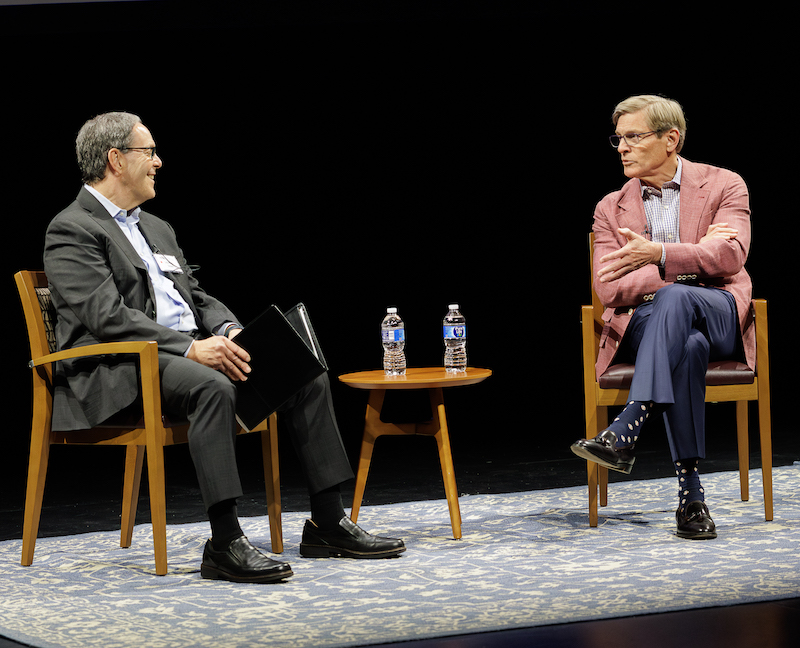
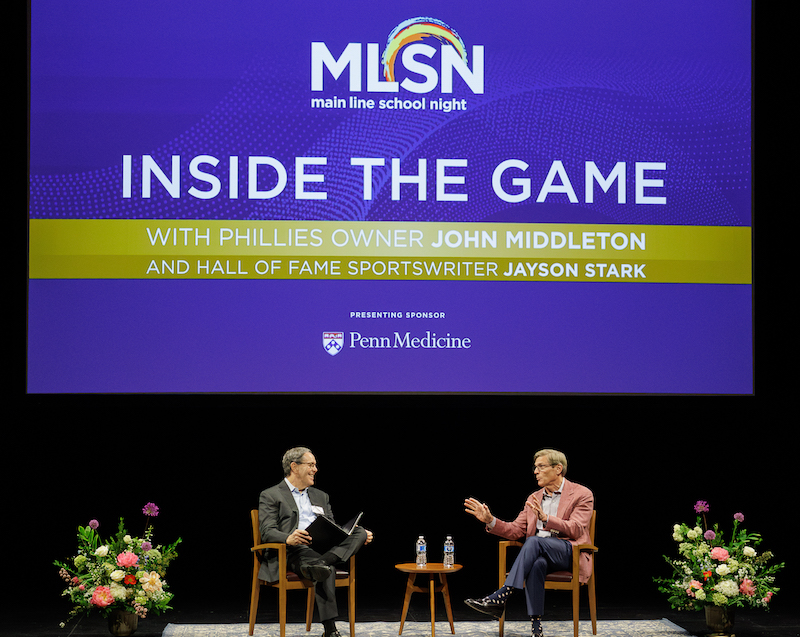
Hall of Fame baseball writer Jayson Stark with Phillies Managing Partner and CEO John Middleton at Villanova’s Mullen Center for the Performing Arts Monday, May 11. The two headlined “Inside the Game,” a fundraiser for the Radnor-based nonprofit, Main Line School Night.
“Inside the Game” turned into inside everything: the Phillies’ front office, the clubhouse – and at moments, John Middleton’s heart.
The Phillies’ Managing Partner and CEO, who rarely agrees to extended public interviews –offered a strikingly candid and sometimes emotional look at the business – and burden – of running one of baseball’s most scrutinized franchises Monday night at Villanova University.
Middleton was the featured guest for Visionary Voices, Main Line School Night’s signature spring fundraiser at the Mullen Center for the Performing Arts, where a packed house of Phillies fans and MLSN supporters met the Phanatic, then hung on every word of the onstage conversation led by Hall of Fame baseball writer Jayson Stark.
Middleton gave them plenty to talk about.
The lifelong Main Liner and Haverford School graduate opened up about everything from the Phillies’ recent managerial shakeup to its “running it back” roster.
He spoke at length about the consequential “last resort” decision to replace manager Rob Thomson with baseball legend Don Mattingly.
The Phillies’ early struggles, he explained, weren’t simply about wins and losses. The organization sensed something deeper, a flatness inside the clubhouse that couldn’t be fixed by tweaking lineups or waiting for bats to heat up.
“There are times when a team struggles constructively,” Middleton said. “And there are other times when you feel there’s something more going on.”
The new skipper quickly brought a heightened sense of accountability and urgency, he said.
Players are more willing to take advice from a .300 career hitter, nine-time Gold Glove winner, and former Yankees captain, Middleton said.
“It’s one thing when a coach talks to you. It’s another when Don Mattingly comes over and says something.”
Still, letting Thomson go was personally painful.
“I think firing people is a real last resort,” he said, recalling painful experiences earlier in his business career when terminated employees suffered emotional breakdowns, divorces and financial problems. “It’s not something you do lightly. You have to treat people properly and with respect.”
Middleton revealed that he went to bed believing newly fired Red Sox manager Alex Cora would become the Phillies’ next skipper. The next day, he learned Cora’s family had cooled on the idea, forcing the Phillies to pivot quickly to “Donnie Baseball.”
The switch, Middleton said, has already energized the club.
“We haven’t lost a series since he took over,” he noted.
When Stark pressed Middleton on why the Phillies chose to “run it back” with much of the same core after repeated postseason heartbreak, Middleton resisted comparisons to legendary teams like the Brooklyn Dodgers’ “Boys of Summer,” who famously broke through after years of frustration.
“You don’t just make your team worse because you want it to be different,” he said.
Instead, Middleton said roster moves must be grounded in honest evaluations of the current clubhouse and who else might be available – not romantic baseball lore or sports-radio narratives. He doesn’t listen to sports-talk stations and ignores social media, he revealed.
The evening’s most emotional moment came when Middleton discussed the Phillies’ decision to buck tradition and retire Hall of Famer Dick Allen’s number while Allen was still alive to experience the honor.
Fighting back tears, Middleton recounted the horrific acts of racism Allen endured during his Phillies career and said the team’s celebration of Allen meant more to him personally than the 2008 World Series title.
The evening also offered a reminder that Middleton isn’t an owner writing checks from a distance. He lives and dies with the franchise the way fans do.
Asked what makes Philly sports fans different, Middleton launched into a story about the Phillies’ infamous 1964 collapse – one that still follows him everywhere.
He laughed about strangers regularly cornering him to talk about how the collapse “traumatized” their families – including children born decades later.
That, Middleton suggested, is Philadelphia sports in a nutshell: nobody really gets over anything.
The Phillies lost roughly $50 million last year, Middleton told the audience, and he expects the losses to grow this season.
But profitability, he made clear, isn’t the point.
For Middleton, owning the Phillies isn’t a passive investment.
It’s an obsession. A responsibility. And, above all, a quest to bring another World Series trophy back to Philadelphia.
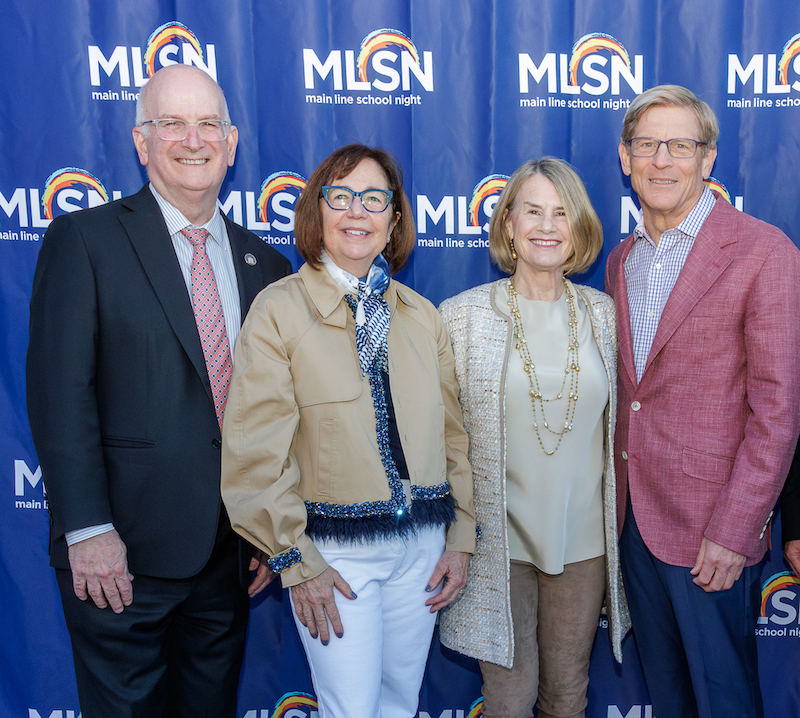
Kevin Mahoney, CEO of Penn Medicine, with wife Pam and Leigh and John Middleton. Penn Medicine was the event’s Presenting Sponsor.
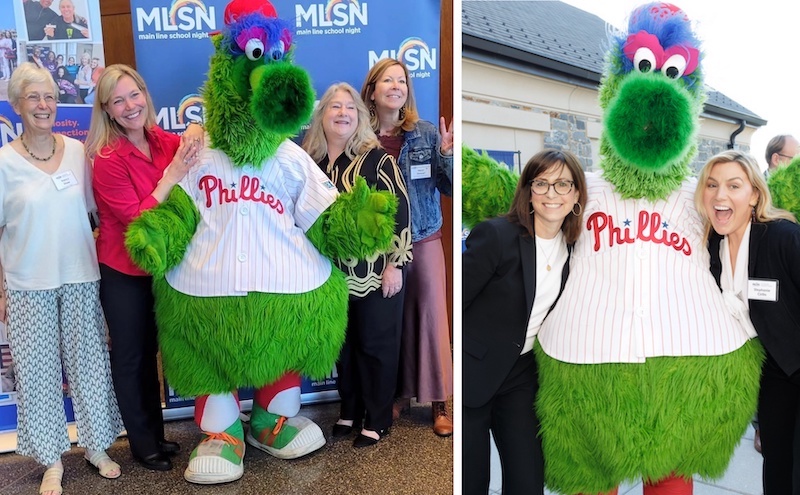
The MLSN team with the Phanatic at the adult-education nonprofit’s May 11 fundraiser at the Mullen Center for the Performing Arts at Villanova, From left: Nancy Shaw, Kimberly Carr, Karen Dunleavy, Micki Stewart, Jane Rutman and Stephanie Cirillo.
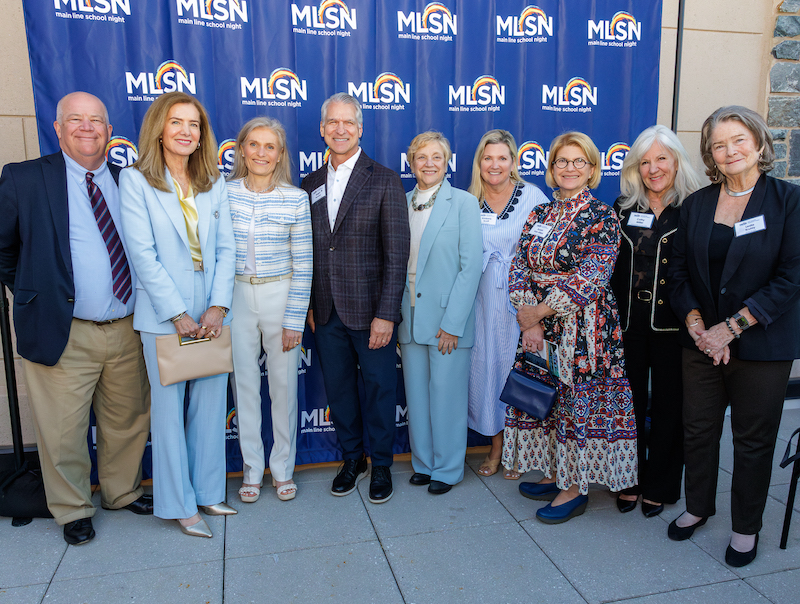
Main Line School Night Board of Directors Andy Hunt, Caroline O’Halloran, Marie-Dominique Ortiz-Landazabal, Ralph Ferraro, Terri Hartman, Kimberly Scott, Susan Van Allen, Cathy Miller and Leslie Kruhly.
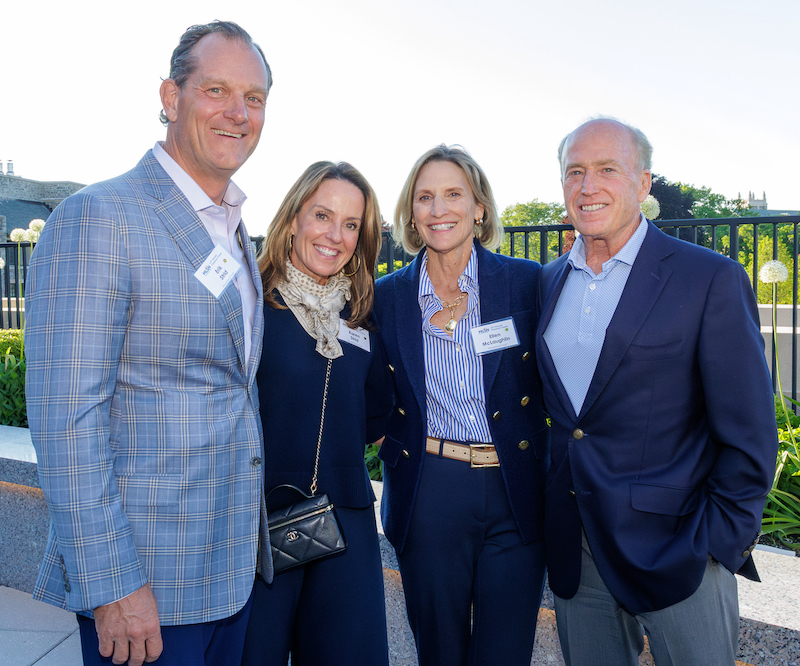
Erik and Karen Strid with Ellen and Joe McLaughlin, chairman and CEO of Haverford Trust, the event’s silver sponsor.
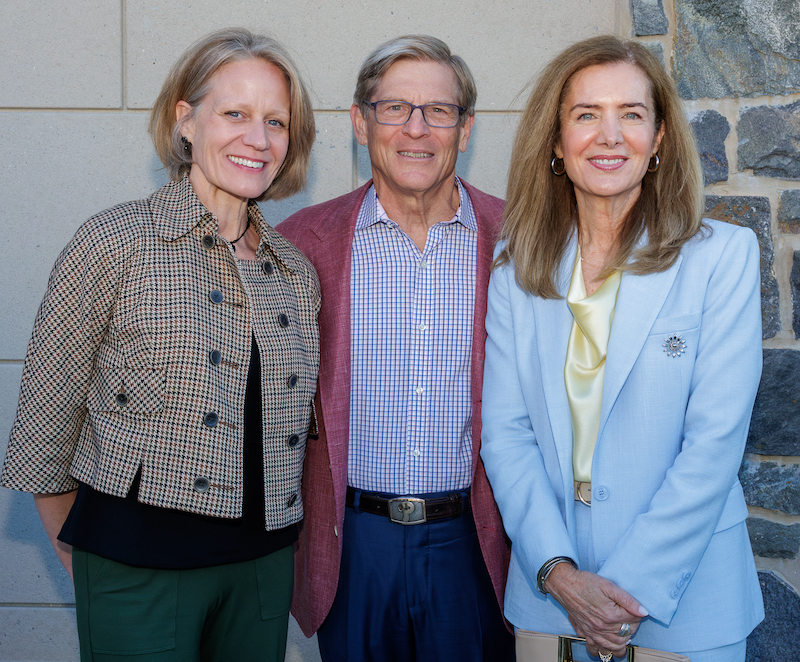
MLSN Executive Director Rebecca Cain, Phillies Managing Partner and CEO John Middleton, and MLSN Board member and Events Committee Chair Caroline O’Halloran.